


A blowout preventer (BOP) works by sealing the wellbore with hydraulically driven rams or an inflatable annular rubber element whenever formation pressure — a sudden influx of oil, gas, or brine called a "kick" — begins to exceed the pressure of the drilling fluid, cutting off uncontrolled flow before it can reach the surface and trigger a catastrophic blowout. Installed at the top of the wellhead on land rigs or on the seabed for offshore operations, a BOP stack typically combines multiple ram preventers with at least one annular preventer, forming a redundant series of barriers rated to withstand working pressures from 5,000 psi for shallow onshore wells up to 15,000 psi for deepwater and high-pressure high-temperature (HPHT) wells, according to industry specifications documented by bop-products.com.
What Is a Blowout Preventer and Why Is It Critical?
A blowout preventer is a large, specialized valve assembly installed at the wellhead during oil and gas drilling operations whose sole purpose is to prevent an uncontrolled release of crude oil or natural gas from the well — an event known as a blowout — which can kill workers, destroy equipment, and cause catastrophic environmental damage. According to ScienceDirect's engineering overview of blowout prevention, the function of the full blowout prevention system is to control the movement of kick fluids (formation fluids that enter the wellbore) during drilling, tripping, and casing operations.
The system must be capable of four distinct actions: shutting the well at the surface; safely removing kick fluids from the wellbore; replacing the original drilling fluid with a higher-density fluid to prevent further formation fluid intrusion; and moving pipe in and out of the hole while pressure is being contained, a procedure known as stripping operations. These four requirements explain why a BOP is not a single valve but a complex stack of multiple devices working in a coordinated sequence.
A blowout can occur when drilling penetrates a formation too quickly, when reservoir pressure is underestimated, or when the weight of the drilling fluid — called mud — is insufficient to balance downhole pressure. Without a functioning BOP, pressurized hydrocarbons can travel up the wellbore unchecked, often igniting at the surface with devastating consequences, as the world witnessed on April 20, 2010, when the Deepwater Horizon rig in the Gulf of Mexico suffered the largest offshore oil spill in U.S. history, releasing approximately 3.19 million barrels of oil over 87 days according to U.S. Chemical Safety Board (CSB) investigation findings.
Key Components of a Blowout Preventer System
A complete blowout preventer system consists of the BOP stack itself, the hydraulic accumulator that powers it, kill and choke lines for circulating well fluids, and a control system operable from multiple locations including the rig floor and a remote Koomey unit. According to ScienceDirect, the basic components include the BOP stack (annular preventer, ram preventers, spools, and internal preventers), the casing head, flow and choke lines and fittings, kill lines and connections, separators, and accumulators.
- BOP Stack: The assembled column of annular and ram preventers bolted to the wellhead, designed to handle specific working pressure ratings. A typical surface stack is 3–5 feet tall; a subsea deepwater stack can stand 18–25 feet and weigh several hundred thousand pounds.
- Hydraulic Accumulator: The main control unit that houses pumps, a hydraulic reservoir, a control manifold, control valves, and compressed gas bottles. According to Keystone Energy Tools, an accumulator often holds enough stored energy to close all BOP units and run backup functions even if other systems fail, which is why it is mounted directly on or near the BOP stack.
- Kill Line: A high-pressure pipe that allows engineers to pump heavy drilling fluid (kill mud) into the wellbore below the closed BOP, increasing downhole pressure to overcome the formation and kill the well.
- Choke Line and Choke Manifold: A system of adjustable valves and pressure sensors that allows controlled release of well fluids and management of wellbore pressure after the BOP has been closed, enabling engineers to circulate the kick out safely.
- Control Pods (Subsea): For subsea BOPs, redundant electronic and hydraulic control pods receive commands from the surface via umbilical cables and can activate BOP functions independently, providing backup in case one pod fails.
- Deadman / AMF System: An automatic mode function that triggers the blind shear ram autonomously if all communication and hydraulic power to the subsea BOP is lost simultaneously, intended as a final failsafe.
How the Two Main BOP Types Work
Two categories of blowout preventer are most prevalent in the industry — the annular BOP and the ram BOP — and a BOP stack almost always uses both types together, with the annular sitting at the top and multiple ram preventers arranged below it. According to Wikipedia's technical overview of blowout preventers, BOP stacks frequently utilize both types, typically with at least one annular BOP stacked above several ram BOPs.
Annular Blowout Preventer
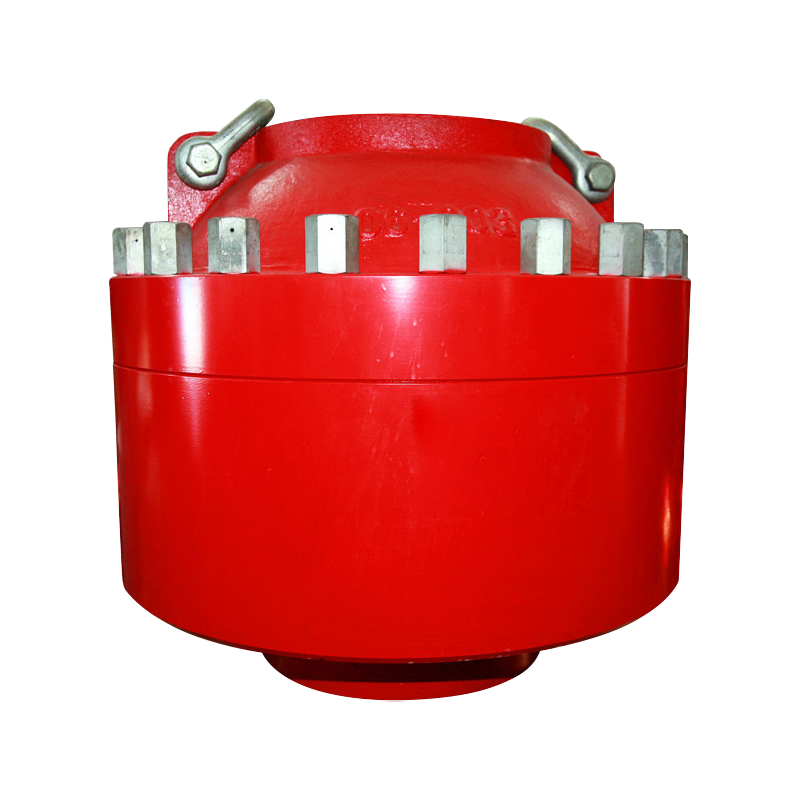
An annular BOP seals the space around the drill string by using hydraulic pressure to compress a thick, donut-shaped rubber element called a packing unit inward until it grips tightly around whatever is in the hole — drill pipe, casing, kelly, or even an irregular tool joint — forming a pressure-tight seal without needing to know the exact diameter in advance. According to Wikipedia, an annular blowout preventer uses the principle of a wedge to shut in the wellbore, and an annular preventer with reinforced rubber packing will shut the annular space around any part of the drilling string in the hole regardless of shape or size.
Annular BOPs can even seal a completely open hole with no pipe present, and they are flexible enough to allow drill pipe to be rotated or slowly moved vertically through the closed seal — a critical capability during stripping operations when a well must be managed under pressure. The annular preventer is typically the first line of defence in a blowout situation because it can activate quickly and adapt to whatever is in the hole at that moment. However, annular BOPs are generally not as effective as ram preventers in maintaining a long-term pressure seal on an open hole, as noted by Wikipedia's technical documentation.
Ram Blowout Preventer
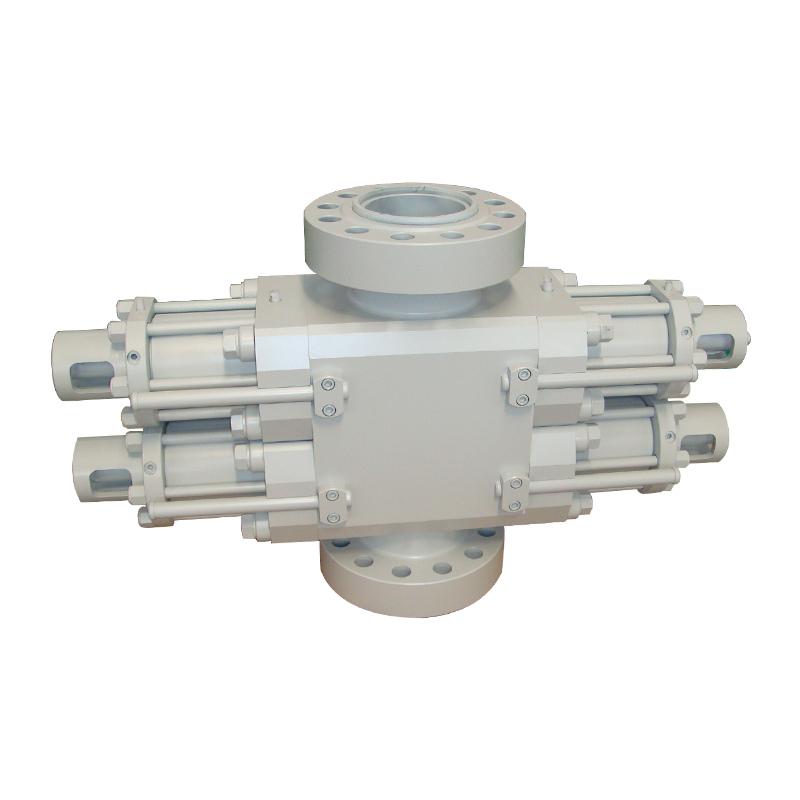
A ram BOP closes by driving two opposing steel rams together hydraulically from opposite sides of the wellbore, with the specific design of those rams determining whether the device grips pipe, seals an open hole, or cuts entirely through the drill string. According to SVES Oilfield Supply, the ram BOP's operational mechanism involves utilizing hydraulic pressure to drive a piston, thereby opening or closing the rams to achieve wellhead closure.
Ram BOPs typically comprise two oppositely arranged rams that are displaced relative to each other to either clamp, seal, or cut, as described in U.S. Patent documentation for BOP stack assemblies. Once closed, a locking shaft mechanism can be engaged to hold the rams shut mechanically, maintaining the seal even if hydraulic pressure is lost — an essential backup feature for extended well control operations.
The Four Types of Ram Preventer: What Each One Does
Ram preventers are not interchangeable: each of the four distinct ram types addresses a specific well control scenario, and a fully equipped BOP stack typically includes at least three different ram types to cover every plausible emergency.
| Ram Type | Also Called | How It Seals | When Used | Limitation |
| Pipe Ram | Semi-sealed ram | Rubber-faced rams close around specific pipe OD, sealing the annular space outside the pipe | When drill pipe or tubing of a known size is in the hole | Size-specific; cannot seal around a different diameter or an open hole |
| Variable-Bore Ram | VBR or multi-size ram | Flexible rubber element adapts to seal a range of pipe diameters in a single unit | When multiple pipe sizes may be in use; reduces need to change rams | Pressure rating may be lower than fixed-size pipe rams |
| Blind Ram | Fully sealed ram | Flat-faced rams close completely across the open wellbore when no pipe is present | When the hole is open (no drill string), such as during tripping or early casing | Cannot be closed on pipe; closing on pipe will damage rams and fail to seal |
| Blind Shear Ram | Shear ram or BSR | Hardened steel blades cut through the drill string like scissors, then seal the open wellbore below | Last-resort emergency; severs and seals simultaneously when all other options have failed | Destroys the drill string; may fail if pipe buckles off-centre inside the BOP bore |
Table 1: The four ram preventer types used in oil and gas well control, comparing their sealing mechanism, activation scenario, and operational limitation. Sources: SVES Oilfield Supply, Wikipedia, ScienceDirect, CSB Deepwater Horizon Investigation Report.
How the BOP Stack Is Arranged
A BOP stack is arranged with the most flexible, fastest-acting device at the top — the annular preventer — and progressively more powerful ram preventers below, so that operators can escalate their response from a quick partial seal to a complete mechanical severance of the drill string if necessary. According to U.S. Patent documentation for subsea BOP stacks, blowout preventers arranged nearer to the reservoir are usually provided to enclose and seal the drill pipes, while those farther from the deposit are provided for severing the drill string and for hermetically sealing the well.
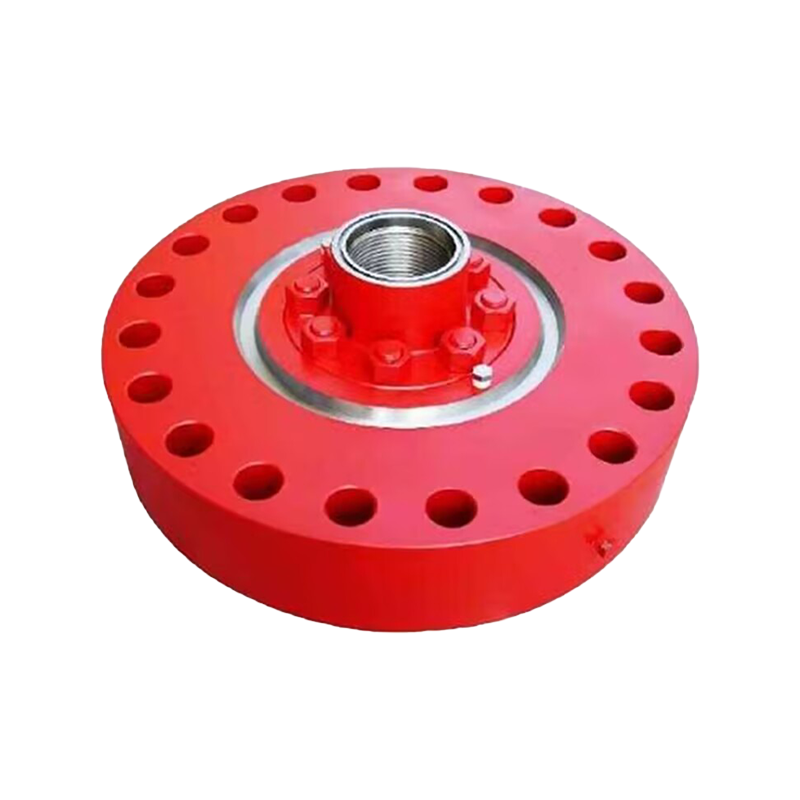
A representative surface BOP stack working from top to bottom typically includes: one or two annular preventers at the top; one variable-bore or pipe ram preventer; one blind ram preventer; and one blind shear ram preventer at the bottom, closest to the wellhead. A drilling spool — a flanged spacer connecting the BOP assembly to the casing head — provides the connection points for kill lines and choke lines. BOP stack designs can be configured to handle working pressures of up to 15,000 psi, according to ScienceDirect, and each configuration carries an API designation code that describes the stack arrangement.
Surface vs. Subsea Blowout Preventers: Key Differences
The fundamental mechanics of surface and subsea blowout preventers are identical, but subsea BOPs must contend with extreme water depth, remote operation, restricted access for maintenance, and the need for multiple redundant control systems that surface BOPs do not require.
| Feature | Surface / Land BOP | Subsea / Deepwater BOP |
| Location | At surface, above ground or on deck | On the seabed, up to 12,000 ft below surface |
| Pressure rating | 3,000 – 10,000 psi typical | 10,000 – 15,000 psi standard |
| Control system | Direct hydraulic from surface accumulator | Redundant electro-hydraulic multiplex (MUX) pods plus deadman failsafe |
| Connection to rig | Direct, via rigid wellhead connections | Via drilling riser extending from seabed to rig |
| Maintenance access | Directly accessible to personnel | Requires ROV (remotely operated vehicle) |
| Weight | Several thousand pounds | Up to 450,000 lb or more for deepwater stacks |
| Emergency disconnect | Not typically applicable | Lower Marine Riser Package (LMRP) allows rig to disconnect and move off while BOP stays on wellhead |
Table 2: Comparison of surface/land blowout preventers and subsea/deepwater blowout preventers across location, pressure rating, control system, maintenance access, and emergency disconnect capability. Sources: Wikipedia, Keystone Energy Tools, bop-products.com.
Step-by-Step: What Happens When a Kick Is Detected
When a kick is detected, the crew executes a well control response that moves through a defined sequence — detecting, shutting in, circulating out, and killing — with the BOP providing the physical barrier that makes all of these steps possible.
- Kick detection: Drilling crews monitor pit volume (the amount of fluid in the mud tanks), pump pressure, and flow rate for anomalies. A pit gain — more fluid returning than expected — is the classic kick indicator. Drilling operators must secure and shut the well for killing operations the moment a kick is detected, according to technical documentation from Rein Wellhead Equipment.
- Shut-in: The driller activates the BOP via control panels located on the rig floor or the Koomey accumulator unit. The annular preventer is typically closed first since it can seal around whatever is in the hole. Closing the appropriate BOP prevents fluids flowing out of the wellbore.
- Pressure read and assessment: With the well shut in, engineers read the shut-in drill pipe pressure and shut-in casing pressure to calculate the density of kill mud needed to overbalance the formation.
- Circulating the kick out: Using the choke manifold, engineers circulate drill fluid through the well at controlled pressure, allowing the kick fluid to migrate safely up and out through the choke line while heavier mud is pumped down the drill string.
- Killing the well: Once the kick fluid has been removed and the wellbore is filled with properly weighted kill mud, the hydrostatic pressure of the mud column exceeds formation pressure, and the well is effectively killed. The BOP can then be opened and drilling resumed.
- Emergency shear (last resort): If the kick escalates beyond the ability to circulate it out — or if the rig must emergency-disconnect — the blind shear ram is activated to sever the drill string and seal the wellbore completely.
Deepwater Horizon: What the BOP Failure Revealed
The Deepwater Horizon disaster of April 20, 2010, remains the definitive case study of what happens when a BOP's last line of defence fails, and the investigation findings from the U.S. Chemical Safety Board (CSB) directly shaped international BOP design and testing standards in the years that followed.
The CSB's investigation report identified four sequential barrier failures leading to the blowout: cement failed to seal the hydrocarbon formations; the negative pressure test was misinterpreted as indicating the well was sealed when it was not; the crew failed to detect that the well was flowing until gas and oil had nearly reached the surface; and finally, the blowout preventer failed to stop the flow and seal the well long enough for corrective actions to be taken.
The BOP's critical failure point was the blind shear ram — the last-resort device designed to cut through the drill pipe and seal the well. According to the CSB and WorkBoat's analysis of the investigation, the drill pipe buckled due to a large pressure differential created when operators closed the pipe rams, placing the pipe off-centre inside the BOP bore and outside the effective shearing reach of the blind shear ram. The CSB report also identified multiple miswirings in the control pods: one solenoid coil was incorrectly wired so that two channels opposed each other, which would have prevented solenoid valve actuation independently of all other failures. Battery degradation in the deadman system added a further layer of failure.
The broader investigation, as summarized in academic analysis published at Academia.edu, attributed the BOP's failure to inadequate design and testing standards, particularly in API Specification 16D, which governs control systems for BOP stacks. The disaster directly accelerated revisions to API standards and prompted new U.S. Bureau of Safety and Environmental Enforcement (BSEE) regulations requiring more rigorous testing and maintenance of BOP equipment on offshore rigs.
BOP Testing, Maintenance, and Regulatory Requirements
BOPs are subject to mandatory pressure testing and function testing on a regular schedule, with intervals and test pressures set by API standards and national regulatory agencies, because a BOP that has never been tested under real conditions provides only the appearance of safety. Regulations typically require that an annular preventer be capable of completely closing a wellbore, as noted by Wikipedia's engineering overview.
- Function testing: Each BOP component must be opened and closed to confirm correct mechanical operation, typically every 7 to 14 days during active drilling operations.
- Pressure testing: The BOP stack must be pressure-tested to its rated working pressure to verify sealing integrity, typically every time a new BOP is installed and at defined intervals thereafter — in U.S. offshore operations, every 21 days under BSEE regulations post-Deepwater Horizon.
- Accumulator testing: The hydraulic accumulator must be verified to contain sufficient pre-charged pressure to close all BOP functions without any pump assistance, confirming the failsafe energy reserve is intact.
- Control pod testing (subsea): Both the primary and secondary control pods on subsea BOPs must be tested independently to confirm that loss of one pod does not compromise the system's ability to close any function.
- Shear ram capability verification: Following the Deepwater Horizon investigation's finding that off-centre pipe prevented shearing, regulatory guidance now requires that shear ram designs be tested against the specific pipe grades and joint configurations that will be used in each well programme.
Frequently Asked Questions About Blowout Preventers
Q: What is the difference between a kick and a blowout?
A kick is an influx of formation fluids — oil, gas, water, or any combination — into the wellbore that occurs because wellbore pressure has momentarily dropped below formation pressure. A kick is a manageable event if detected early and the BOP is closed promptly to shut in the well. A blowout is the consequence of an uncontrolled kick: formation fluids continue flowing to surface without any effective barrier, often with explosive and environmentally catastrophic results. The BOP's entire purpose is to convert every kick into a controlled, manageable event before it can become a blowout.
Q: Can a blowout preventer be used while the drill string is rotating?
Yes, for the annular BOP. According to Wikipedia's technical overview, annular blowout preventers are effective at maintaining a seal around the drill pipe even as it rotates during drilling. The rubber packing element in the annular preventer can grip the pipe firmly enough to contain pressure while allowing slow rotation or controlled axial movement, which is the basis for stripping operations. Ram preventers, by contrast, are designed to grip a stationary pipe and must not be used for dynamic rotation or significant pipe movement.
Q: How large and heavy is a typical subsea BOP stack?
A typical subsea deepwater BOP stack, including its Lower Marine Riser Package (LMRP), can stand 18–25 feet tall and weigh in excess of 400,000 to 450,000 pounds (roughly 200 metric tons). The stack's bore diameter — the internal opening through which the drill string passes — is typically 18.75 inches for deepwater operations. These dimensions reflect the extreme forces the BOP must resist at rated pressures of 10,000 to 15,000 psi in water depths that can exceed 10,000 feet.
Q: What is a drilling riser and how does it connect to the BOP?
A drilling riser is a large-diameter pipe string that connects the subsea BOP on the seabed to the drilling rig at the surface, providing a continuous enclosed pathway for the drill string, drilling fluid returns, and kill and choke lines. According to Wikipedia, a riser effectively extends the wellbore to the rig. The riser attaches at its lower end to the LMRP portion of the BOP stack via a hydraulic connector, and the riser can be quickly unlatched to allow the rig to move off location in an emergency while the BOP remains in place and sealed on the wellhead below.
Q: Why did the shear ram on Deepwater Horizon fail to seal the well?
According to the U.S. Chemical Safety Board's investigation findings reported by WorkBoat, the blind shear ram on the Deepwater Horizon failed primarily because the drill pipe buckled under the extreme internal pressure difference created when the pipe rams were closed earlier in the emergency sequence. This "effective compression" bent the drill pipe off-centre inside the BOP bore, placing it outside the effective cutting reach of the shear ram's blades. Additional contributing factors identified by investigators included electrical miswiring in one of the control pods, degraded batteries in the deadman system, and the industry's general lack of awareness that off-centre pipe could prevent a shear ram from functioning — a design scenario that had never been formally tested before the disaster.
Q: Are there alternatives to traditional BOPs for well control?
Managed Pressure Drilling (MPD) systems represent a complementary approach that maintains continuous, precisely controlled wellbore pressure throughout the drilling process to minimize the conditions that cause kicks in the first place, reducing reliance on reactive BOP intervention. Some experimental designs incorporate rotating control devices (RCDs) that seal around a rotating drill string at surface to allow low-pressure controlled drilling. However, no commercially deployed system currently replaces the BOP as the primary mechanical barrier for emergency well control; MPD and RCDs supplement rather than substitute for BOP technology.
Summary
A blowout preventer works by placing a series of mechanically redundant hydraulic barriers — annular preventers at the top, pipe rams and blind shear rams below — directly over the wellhead, ready to seal instantaneously against pressures up to 15,000 psi whenever a kick threatens to become a blowout. The annular BOP provides fast, flexible first-line sealing around any pipe geometry; pipe rams grip and seal around a specific drill string diameter; and the blind shear ram acts as the industry's last resort, severing the drill string and sealing the open hole in a single hydraulic stroke.
The Deepwater Horizon disaster demonstrated with fatal consequences that a BOP's effectiveness depends not only on correct mechanical design but on proper wiring, maintained batteries, regular testing against realistic scenarios including off-centre pipe, and rigorous application of the procedural well-control steps that activate the system in time. The ongoing evolution of BOP design — including improved shear ram testing protocols, electro-hydraulic multiplex control redundancy, and deadman failsafe systems — reflects an industry that continues to absorb the lessons of that event in pursuit of wells that can truly be controlled at every stage of their lifecycle.
 + 86-0515-88429333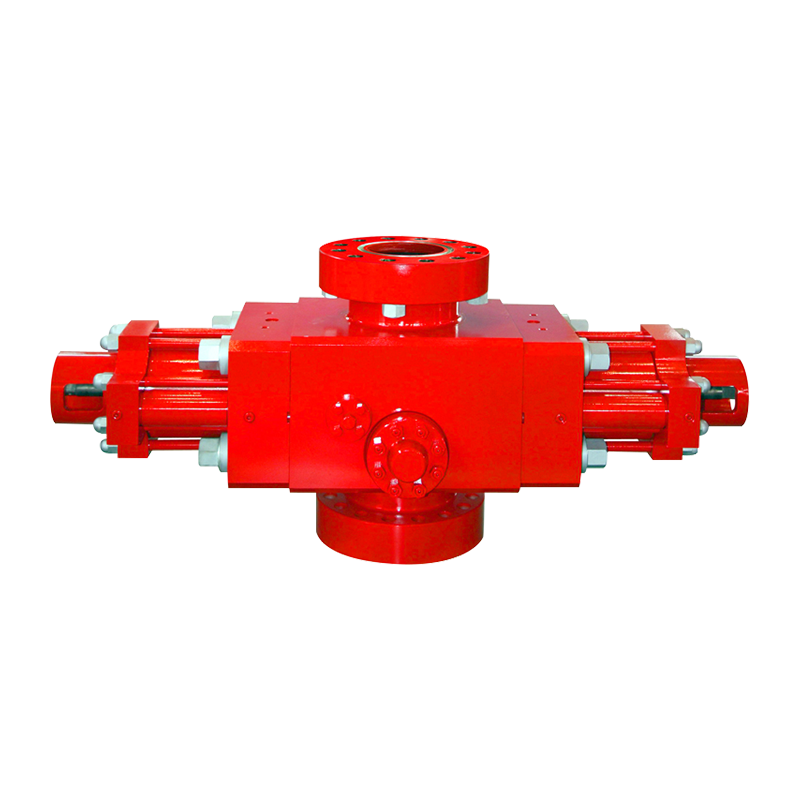
 CONTACTEZ-NOUS
